Welcome to this week’s briefing, where we dissect the latest in home battery storage, virtual power plants, and the regulatory landscape shaping Europe’s energy transition. We focus on verifiable data and clear attributions.
Kiwigrid has launched a pan-European VPP platform, aiming to unify how distributed batteries and solar assets participate in grid services. According to ess-news.com, the platform standardizes participation terms across multiple European markets. However, as reported by the same outlet, national and regional programs may still offer different terms, so asset owners should evaluate local conditions carefully.
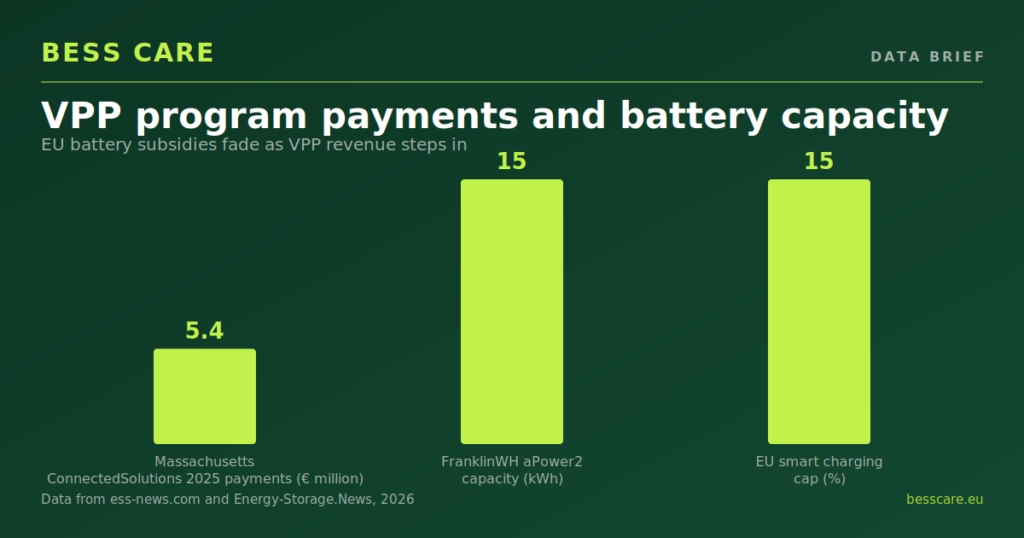
Across the Atlantic, the Massachusetts ConnectedSolutions program continues to show strong financial incentives for battery owners. Per ess-news.com (July 2026), the program paid more than $5.4 million total to battery owners in 2025, underscoring the value of time-of-day discharge in that region.
In a separate development, FranklinWH’s aPower2 unit is being deployed in California and Texas as part of an expanded VPP partnership with Sunrun. According to Energy-Storage.News (July 2026), the aPower2 offers 15 kWh of usable capacity, making it a substantial home battery option. The partnership aims to aggregate these units for grid relief during peak events.
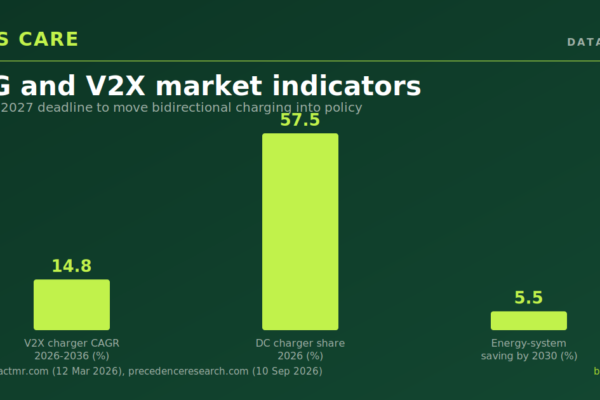
Ember’s latest report on EU batteries and demand flexibility highlights significant potential for home batteries to reduce peak demand. The analysis, per Ember’s report, notes that downward potential in 2025 is constrained by vehicle-to-grid applications being only at pilot phase across Europe. This means stationary batteries will carry the bulk of flexibility needs in the near term.
Finally, a new policy brief from the Centre for European Reform examines the economic fallout of China’s aggressive export strategy. The brief, available at cer.eu, argues that Germany’s delayed response to Chinese industrial overcapacity could carry significant costs for its manufacturing sector, including solar and battery components.
For homeowners and C&I project owners, the key takeaway is that while VPP participation is becoming more accessible, the financial terms vary widely. Always cross-check local program details with independent sources like those cited above.
— The BessCare Editorial Team