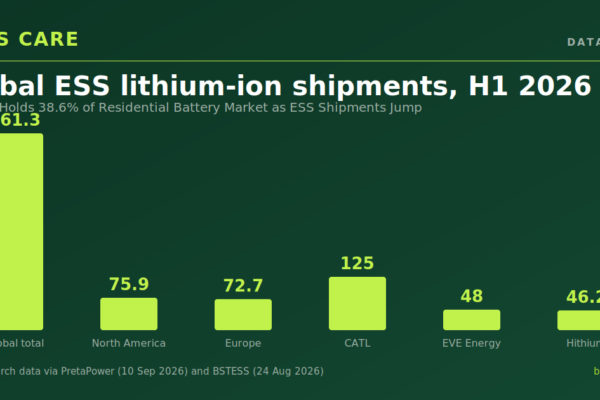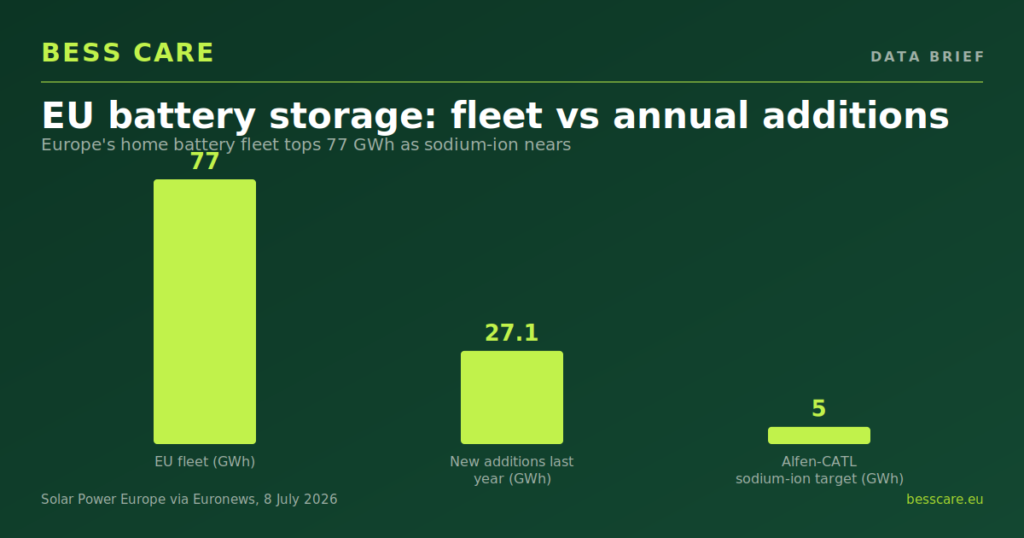
Europe’s home battery fleet has reached 77 GWh, according to Euronews, as sodium-ion technology edges closer to commercial deployment in residential storage.
German homeowners have driven much of the recent expansion, installing battery systems at record pace to shield themselves against volatile fossil fuel prices, Euronews reported.
The broader European market has benefited from falling cell prices and improved inverter integration, making payback periods shorter for typical single-family households.
Sodium-ion batteries, long viewed as a cheaper but lower-density alternative to lithium-ion, are now being positioned for stationary storage applications where weight and volume matter less than cost and cycle life.
CATL has set a sodium-ion BESS delivery timeline and outlined cold-weather specifications, according to ESS News, signaling that the chemistry is moving from pilot projects toward commercial supply.
For homeowners in northern Europe, cold-weather performance has been a persistent concern with lithium iron phosphate systems installed in unheated garages or outbuildings.
Commercial and industrial project owners are watching the residential segment closely, since many of the same cell and inverter supply chains feed both markets.
Whether sodium-ion captures meaningful share of the European home battery market will depend on manufacturing scale, warranty terms, and how quickly suppliers can certify products for local grid codes.
For now, the residential storage buildout continues to accelerate, with Germany remaining the single largest contributor to the continent’s installed base.