For Belgian homeowners weighing a home battery, the regulatory picture remains unchanged this week: neither VREG, Fluvius, nor the federal energy minister has announced any new subsidy or tariff adjustment for residential storage. That silence stands in contrast to a growing body of international evidence on how batteries interact with dynamic electricity tariffs and import costs — evidence that Belgian regulators have yet to address in any public communication.
The most directly relevant finding for Belgian households comes from a peer-reviewed analysis published in the journal Energy Policy (February 2026, DOI: 10.1016/j.enpol.2025.114952). Based on data from 448 households, the study found that a battery connected to a dynamic tariff creates a direct incentive structure: charge during negative-price or low-price hours, discharge during high-price evening peaks. This is precisely the tariff model that VREG has been testing in Flanders, but no official statement from the regulator confirms whether this study will inform any future policy design.
On the cost side, the Section 232 levy in the United States — which sets a US$0.22 per watt minimum import price on solar cells and a US$100 per kilogram minimum on silicon wafers, plus a 15% flat tariff — has no direct bearing on Belgian battery prices. However, PV Tech reports that expert opinion on the impact of these tariffs is divergent, and that most US-made modules will rely on imported cells for the next few years. Belgian homeowners should not expect any immediate price signal from this policy, as it applies to US imports, not European supply chains.
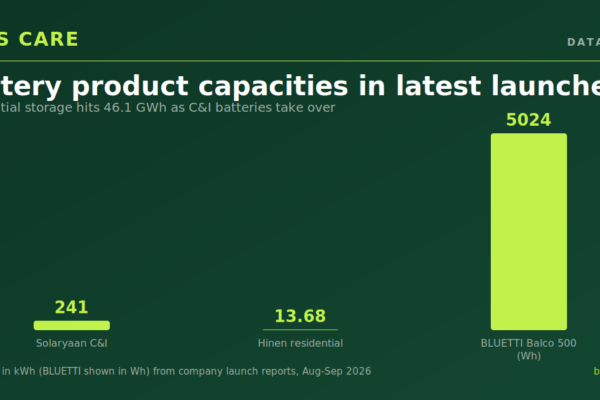
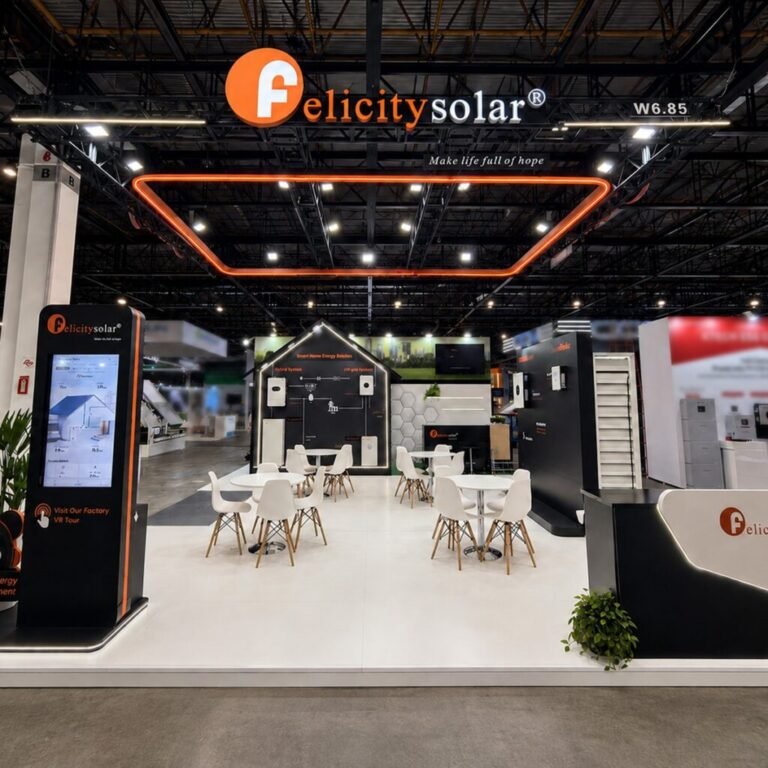
One notable product development at Intersolar in June 2026 was WattCycle’s unveiling of a 10 kWh, 5 kW balcony solar battery, which the company claims breaks capacity records for this category. While this is not a Belgian product, it signals that plug-in battery capacity is growing. No Belgian distributor has confirmed availability or pricing for this unit as of this writing.
Finally, a cautionary note from Australia: under a subsidy scheme there, households can claim a subsidy worth about 30 per cent of the up-front cost of a system, which was framed to slash the cost of a typical 10-kilowatt-hour battery by about $4,000. However, ABC News reports that the original design meant customers could in reality attract far greater subsidies for much larger systems. Battery installation rates have since collapsed. This is a reminder that subsidy design matters — but it is an Australian program, not a Belgian one, and no Belgian regulator has indicated any similar scheme is under consideration.
Bottom line: For Belgian homeowners, no new regulatory or subsidy information is available from VREG, Fluvius, or other national authorities. The evidence above comes from non-Belgian sources and should be treated as context, not as an indication of local policy changes.