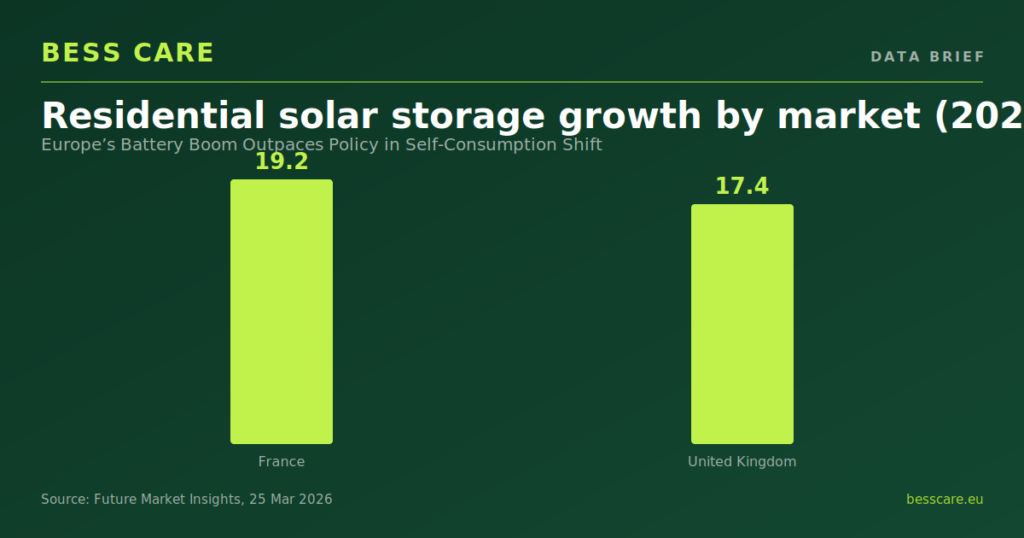
According to Future Market Insights, in its residential solar energy storage market report published on 25 March 2026, declining feed-in tariff rates are making self-consumption economics increasingly attractive for European homeowners. The report notes that battery storage is no longer an optional add-on but a core component of new residential solar installations.
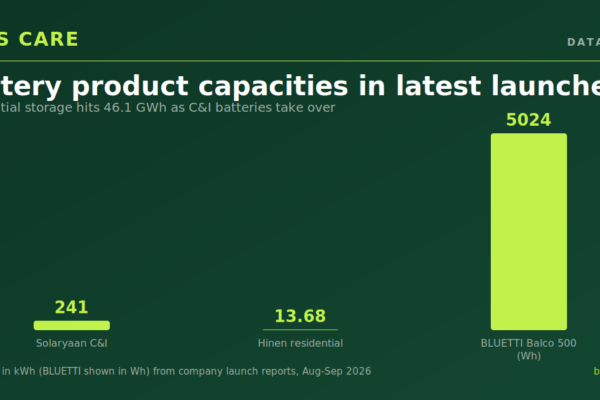
Per StockTitan, SolarEdge’s latest commercial storage unit offers a capacity of 197 kWh, sized to shift a significant portion of an afternoon’s solar generation into the evening peak, when commercial electricity tariffs in many European countries are highest. The company highlighted that this configuration targets businesses with high daytime consumption and limited export opportunities.
Industry analysis from Ember Energy suggests that a commercial operation with a 100 kW solar array exporting at a low feed-in tariff loses substantial revenue compared to a system that stores energy and uses it during peak demand periods. The insight, while drawn from broader global solarisation trends, is directly applicable to European C&I operators facing compressed wholesale prices.
For homeowners, the calculus is similar. According to Nature Energy, household batteries can increase self-consumption ratios from roughly 30% to over 70%, dramatically improving payback periods even without subsidies. Meanwhile, pv-magazine reports that net-metering policy changes in emerging markets are pushing residential prosumers toward storage as a hedge against tariff revisions.
| Segment | Primary Driver | Recommended Action |
|---|---|---|
| Residential | Declining feed-in tariffs | Pair new solar with battery to maximise self-consumption |
| Small C&I | Peak tariff avoidance | Evaluate modular storage for shiftable load |
| Large C&I | Export revenue loss | Model storage against wholesale price volatility |
BessCare advises all project owners to review their current export tariffs and compare them with local peak import prices before finalising any new solar-only installation. Storage is no longer a luxury—it is increasingly the default economic choice.