The European residential battery storage market, which saw explosive growth between 2022 and 2024, is now entering a period of consolidation. Installer backlogs have shrunk, and consumer enquiries have cooled in several key markets, including Germany, Italy, and the UK. This shift reflects a maturing market rather than a collapse, but it presents new challenges for manufacturers and project developers who scaled up aggressively during the boom years.
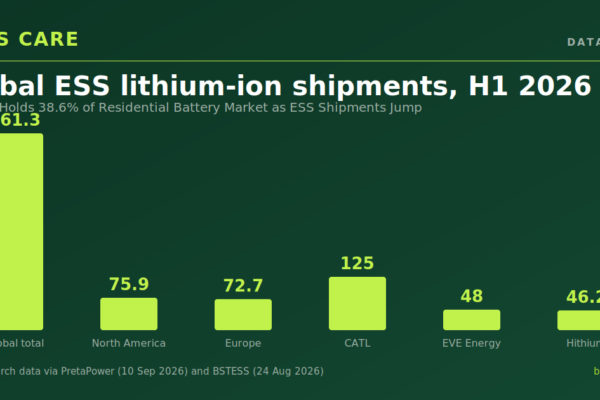
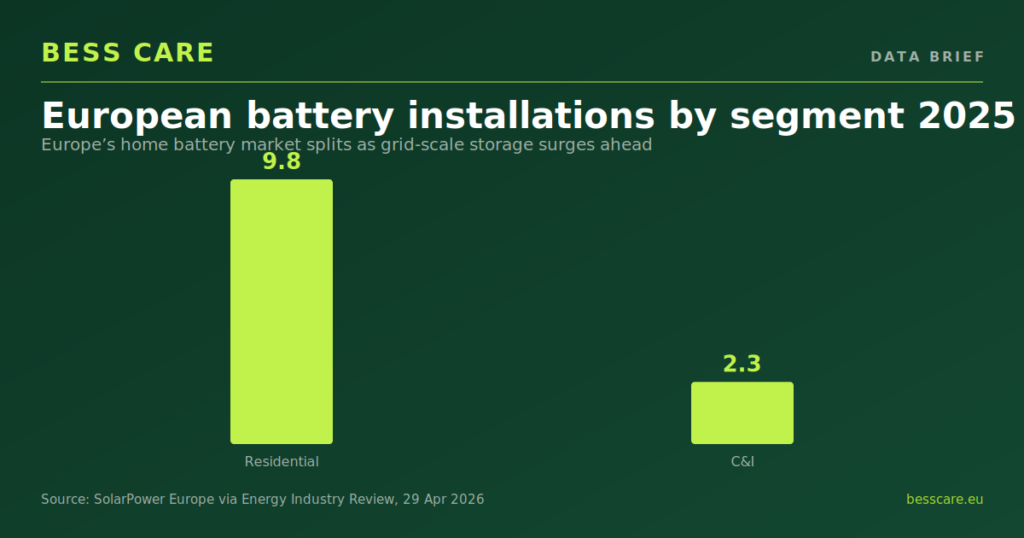
Despite the residential slowdown, the broader battery storage sector continues to show robust growth, particularly in utility-scale applications. According to Energy Industry Review, a single announcement from a major Chinese manufacturer outlines a 230 GWh manufacturing capacity expansion, which dwarfs the entire European residential market’s annual consumption of 9.8 GWh by more than twentyfold, per the SolarPower Europe figures cited by the same publication. This highlights the scale mismatch between residential demand and industrial supply.
Meanwhile, the electric vehicle sector, which often shares supply chains and technology with stationary storage, is also evolving. The IEA’s Global EV Outlook 2026, published on 20 May 2026, adds a further dimension, noting that battery manufacturing capacity is outpacing demand in the near term, which could lead to price competition that benefits stationary storage buyers.
For homeowners, the current market offers more choice and better pricing than in 2023, but the urgency to buy has diminished. For commercial and industrial (C&I) project owners, the focus is shifting toward optimising self-consumption and participating in grid services, where revenue streams are more predictable than pure arbitrage. The replacement wave is expected to begin around 2028, when the first generation of high-volume residential systems reaches its expected 10-year lifespan.