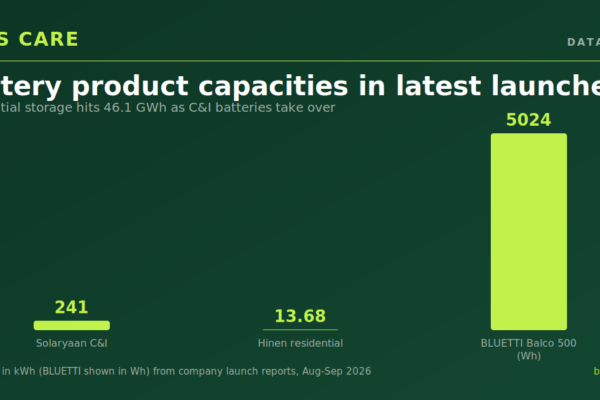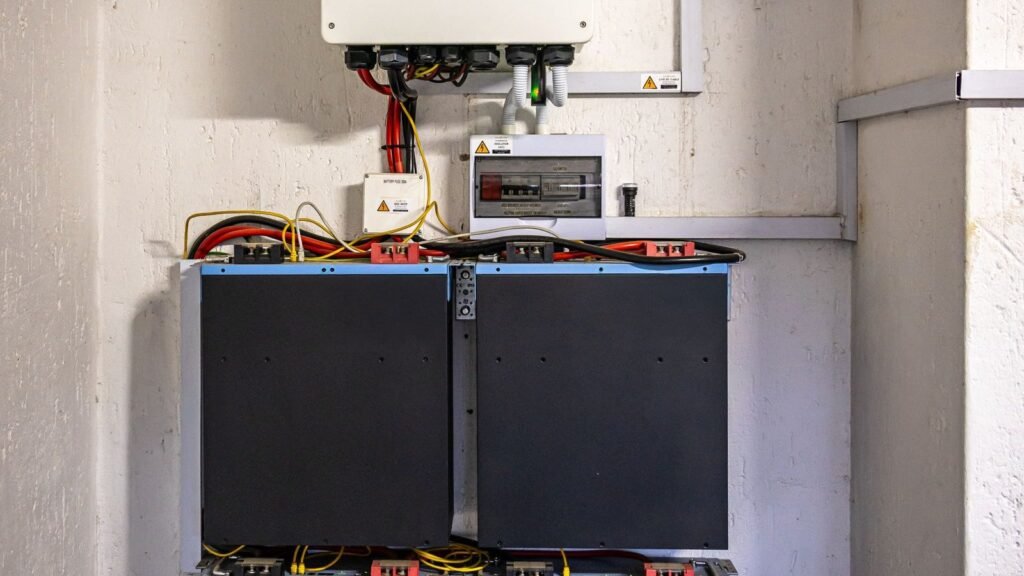
Residential battery demand in Europe continues to be driven by high retail electricity prices, falling battery pack costs, and the desire for backup power. According to Fortune Business Insights, the residential battery market is expanding as homeowners pair PV with storage to shift solar generation into evening peaks and to reduce exposure to volatile tariffs.
That said, payback periods vary widely by country. In markets with generous net metering, the economics of adding a battery are weaker; in markets with time-of-use tariffs and low feed-in tariffs, the case is stronger. Homeowners should model their own load profile rather than rely on generic payback claims.
Virtual power plants are the connective tissue between distributed batteries and wholesale or balancing markets. Kiwigrid launched a pan-European virtual power plant platform in June 2026, per Energy Storage News (https://www.ess-news.com/2026/06/08/kiwigrid-launches-pan-european-vpp-platform) — the kind of aggregation infrastructure that lets thousands of small batteries behave like a single flexible asset.
Forecasts for European battery energy storage vary by scope and methodology. According to Market Data Forecast, the Europe battery energy storage system market is expected to grow steadily through the end of the decade, driven by grid-scale, C&I, and residential segments (https://www.marketdataforecast.com/market-reports/europe-battery-energy-storage-system-market).
On the demand-flexibility side, Ember reports that batteries and demand flexibility are ready to scale across the EU, with the caveat that market rules and grid connection processes still lag (https://ember-energy.org/latest-insights/batteries-and-demand-flexibility-are-ready-to-scale-across-the-eu). Ember’s EU BESS outlook points to 603 GWh by 2030, per Ember (https://ember-energy.org/latest-insights/batteries-and-demand-flexibility-are-ready-to-scale-across-the-eu).
Policy is shaping both supply chains and revenue stacks. The EU local content push is documented in the IEA Global EV Outlook 2026, per IEA (https://www.iea.org/reports/global-ev-outlook-2026/manufacturing-and-trade) — relevant because battery manufacturing and trade rules increasingly affect which cells and systems are eligible for support schemes.
| Segment | Typical size | Primary revenue | Key risk |
|---|---|---|---|
| Residential | 5–20 kWh | Self-consumption, tariffs | Payback sensitivity |
| C&I | Flexibility, demand charge | Grid connection delays | |
| Utility-scale | >10 MWh | Wholesale, capacity | Market saturation |
For homeowners and C&I owners, the practical takeaway is to treat batteries as revenue assets, not just backup. That means checking aggregator terms, local market rules, and whether your system size qualifies for the most valuable services.