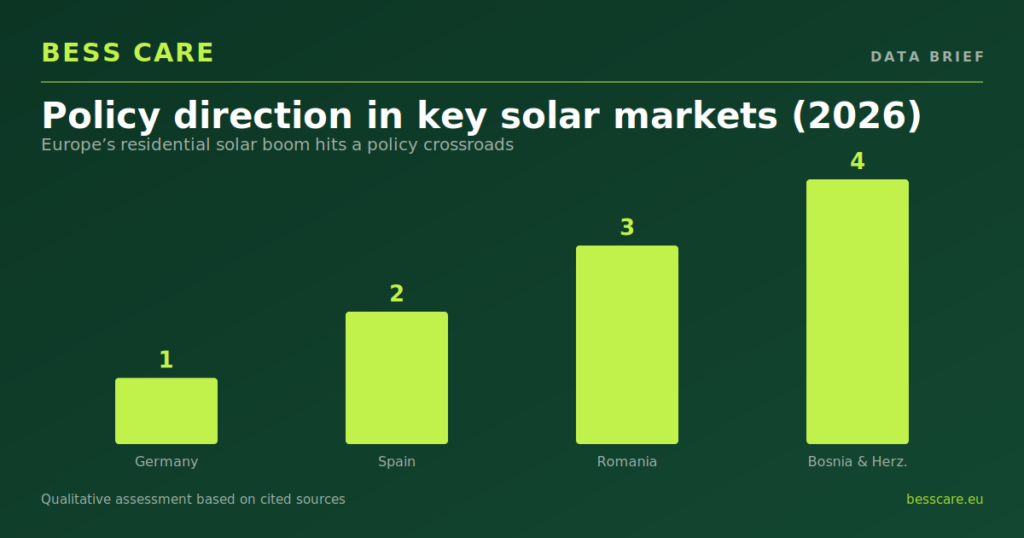
Per Bloomberg’s report of 18 July 2026, the draft law states that from 2027, new renewable generators should receive support “in a way that benefits both the market and the system.” In practice, this means a significant reduction in feed-in tariffs for new solar installations, with a stronger emphasis on self-consumption and market-based revenue models.
According to The Energy Industry Review report, the same report also cites a Wood Mackenzie prediction from December 2025 of a decline in global demand for solar inverters in 2025 and 2026, due to geopolitical tensions and policy uncertainty. This context matters for European buyers, as supply chain shifts could affect pricing and availability of inverter components.
For homeowners and C&I project owners, the key takeaway is clear: projects commissioned before the end of 2026 will remain under the current support framework. After that, new installations will need to rely more heavily on direct consumption, battery storage, and power purchase agreements. The full details of the German draft law are available in the Bloomberg article, which remains the primary source for the specific numbers and timelines.