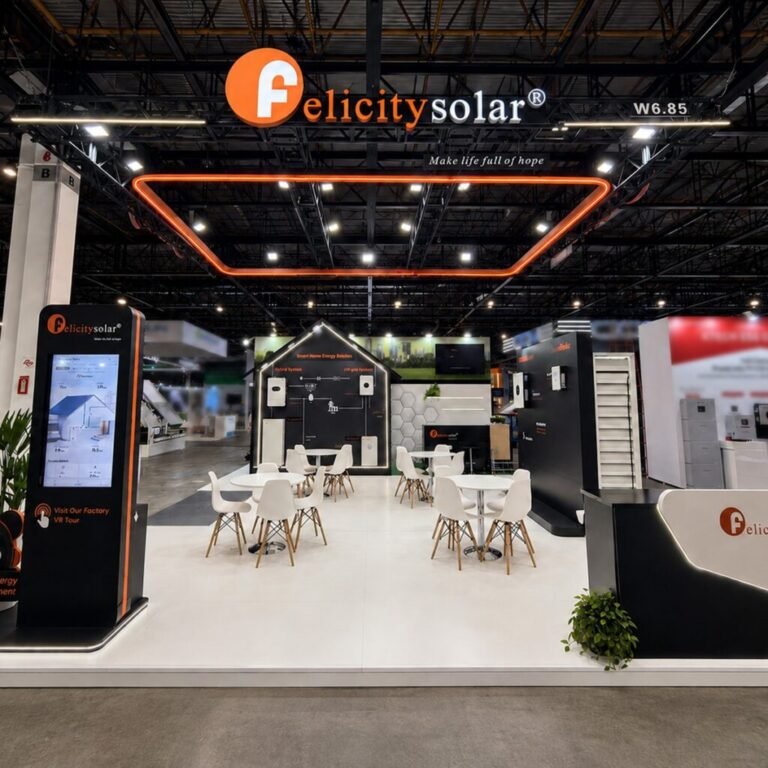
The most important takeaway from InterSolar Europe 2026, held in Munich alongside The smarter E Europe, is that the standalone solar inverter is now a legacy product. The lines between solar, storage, EV charging, and energy management have blurred to the point of being indistinguishable, and any homeowner or C&I project owner purchasing a system without integrated battery and EV capabilities is locking in obsolescence. This is not a prediction; it is the observable state of the market as reported by CleanTechnica on 27 June 2026. The conference itself, despite its segmented halls, showcased that the value proposition has shifted entirely to the intersection of these technologies.
For European buyers, this means the decision-making framework has changed. You are no longer buying a solar array. You are buying a home energy operating system. The evidence from Munich, combined with parallel developments in the US market that are rapidly migrating to Europe, points to a single conclusion: the battery is the new centerpiece, and the solar panel is just a peripheral input. The following analysis breaks down why this matters for your next purchase, what the alternative landscape looks like, and how hardware innovations are lowering the barrier to entry.
CleanTechnica’s coverage of InterSolar Europe 2026, published on 27 June 2026, explicitly notes that the intended organization of the conference into separate events—InterSolar, ess Europe, Power2Drive, and EM-Power—has become a formality. The reporter observed that “the lines between them have increasingly blurred, as solar is combined with storage, EV charging and energy management.” This is not a superficial trend. It reflects a fundamental change in the engineering and economic logic of distributed energy resources.
For the homeowner, this convergence means that a PV-only system is a stranded asset. The inverter is no longer just a DC-AC converter; it is the brain of a microgrid. The battery is no longer a backup box; it is the primary energy arbitrage tool. And the EV charger is no longer a separate appliance; it is a flexible load that can be scheduled around solar production and grid price signals. The European market, which has historically led in feed-in tariffs and self-consumption, is now leading in this integrated approach. The key finding is that the hardware you buy in 2026 must be software-defined and capable of orchestrating all three functions.
The shift in focus from solar panels to batteries is driven by simple economics. Solar panels have become a commodity, with efficiency gains slowing and prices bottoming out. The battery, however, is where the value stacking happens. It allows you to store excess solar power for evening use, to charge an EV overnight, and to participate in grid services. The InterSolar coverage confirms that the exhibition halls for ess Europe (energy storage systems) were effectively the main attraction, with solar hardware relegated to a supporting role.
This is a critical data point for C&I project owners. A commercial solar installation without a battery is now considered incomplete. The ability to shave peak demand charges, provide backup power, and sell flexibility back to the grid is where the return on investment is generated. The hardware on display in Munich was not about higher wattage panels; it was about smarter energy management software, bidirectional inverters, and seamless EV integration.
For years, the Tesla Powerwall was the default recommendation for homeowners seeking a “painless” entry into solar-plus-storage. However, an opinion piece published by Electrek on 28 December 2025 makes a compelling case that this is no longer the optimal strategy. The article, titled “It’s time to start recommending some Tesla Powerwall alternatives,” cites Kristina Zagame from EnergySage, who states that the “EG4 PowerPro solar battery from EG4 Electronics is the strongest alternative to the Tesla Powerwall.”
This is significant for the European market because it signals a diversification of supply. The Electrek piece argues that the “one-brand solution” is no longer necessary. Homeowners are now looking for the best individual components—a battery from one manufacturer, an inverter from another, and a management system from a third—that can be integrated to meet specific needs. This is a direct challenge to the vertically integrated approach that Tesla has championed.
To illustrate the current state of the market, we can compare the leading options based on the data available from the provided sources. The following table outlines the key characteristics as reported by Electrek and CleanTechnica, focusing on the shift from a single default option to a multi-vendor landscape.
| Battery System | Key Differentiator (per source) | Source & Date |
|---|---|---|
| Tesla Powerwall | Former default “painless” option; one-brand solution; high brand recognition. | Electrek — 28 Dec 2025 |
| EG4 PowerPro (EG4 Electronics) | Identified as the “strongest alternative” to Powerwall by EnergySage; offers competitive specs for the price. | Electrek — 28 Dec 2025 |
| Integrated Solar+Storage+EV Systems | Systems that combine all functions into one management platform, as showcased at InterSolar Europe 2026. | CleanTechnica — 27 Jun 2026 |
This table is not exhaustive, but it highlights the core trend. The recommendation from EnergySage, a reputable home solar comparison platform, is that the market has matured. Homeowners are no longer forced into a single ecosystem. They can choose a battery based on capacity, chemistry, and price, and then pair it with a compatible inverter and EV charger. The “painless” experience is now available from multiple vendors, which is a win for consumers.
While the Munich conference focused on high-level integration, a parallel revolution is happening at the grid connection point. A CleanTechnica article from 4 December 2025 details how US startup ConnectDER is deploying “meter socket adapters” to reduce the cost of connecting solar, storage, and EV charging to the home. The article, titled “An Army Of Meter Socket Adapters Is Coming For Your Fossil Fuels,” explains that these devices simplify the physical connection to the utility meter, avoiding the need for a costly and time-consuming service panel upgrade.
This is directly relevant to European homeowners. While the US meter socket standard differs from the European DIN rail or three-phase systems, the principle is identical. The cost and complexity of grid connection is often the single largest soft cost in a solar-plus-storage installation. Any hardware that simplifies this process—whether it is a meter socket adapter or a pre-certified AC coupling unit—lowers the total installed cost. The ConnectDER article, dated 4 December 2025, indicates that these devices are “coming for your fossil fuels” by making the switch to electric appliances and EV charging more affordable.
The significance of the meter socket adapter is not just in the hardware itself, but in the labor it saves. An electrician can install a meter socket adapter in a fraction of the time it takes to rewire a panel. This reduces the upfront cost, which is a primary barrier for homeowners. The CleanTechnica article notes that this helps “cut the cost of rooftop solar, home energy storage, and EV charging stations.” For European C&I projects, similar innovations in grid interconnection hardware are essential to meet the aggressive deployment targets for EV fleets and battery storage.
This is the missing link in the convergence story. You can have the best integrated inverter and the smartest battery, but if the connection to the grid is expensive and slow, the project economics suffer. The “army” of adapters and simplified connection devices is the enabling technology that makes the integrated home energy system viable for the mass market.
The convergence trend is not limited to Europe. Two case studies from the United States, reported by CleanTechnica, provide concrete examples of how solar, storage, and EV charging are being deployed together. These examples serve as a blueprint for what European projects should look like.
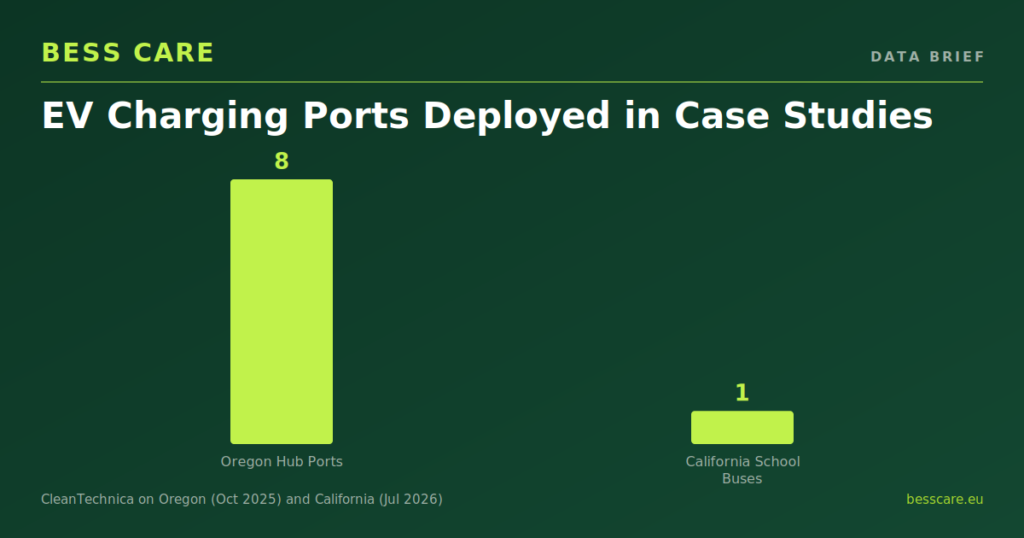
On 18 October 2025, CleanTechnica reported on a new fast EV charging hub in Pendleton, Oregon. The project, deployed by XCharge North America, features four dual-dispenser GridLink chargers, providing a total of 8 fast EV charging ports. Crucially, this hub is not grid-dependent. It utilizes solar power and energy storage to supply the chargers, reducing the strain on the local grid and lowering operating costs.
This is a perfect example of the InterSolar Europe thesis in action. The charging hub is not just a bunch of chargers; it is a microgrid. The solar panels generate power, the battery stores it, and the chargers dispense it. The source, dated 18 October 2025, confirms that this is a viable model for remote or high-demand locations where grid upgrades are prohibitively expensive. For European C&I owners, this validates the business case for co-locating solar and storage with EV fleets.
A more recent example, published on 10 July 2026, involves a California school district that is “jumping into solar, storage, & electric buses.” The district is working with ForeFront Power for the solar, battery storage, and EV charging infrastructure, and with The Mobility House for vehicle-to-grid (V2G) management. The article specifically mentions that the fast chargers will be connected to The Mobility House platform, which has been a leader in V2G for over a decade.
This is the ultimate expression of the convergence trend. The school buses are not just vehicles; they are mobile batteries. When parked, they can discharge power back to the grid or to the school building, providing a revenue stream and grid resilience. The project, dated 10 July 2026, demonstrates that the technology is ready for prime time. The integration of solar, stationary storage, and mobile EV storage into a single managed system is the state of the art.
The evidence from these sources is clear. The future of home and commercial energy is integrated. Here are the actionable takeaways:
The takeaway from InterSolar Europe 2026 is that the industry has pivoted. The winners in this market will be those who embrace the complexity of integration and offer it as a seamless package. The losers will be those who continue to sell solar panels as a standalone commodity. For the consumer, this is a golden age of choice and capability, but it requires a more informed approach to purchasing.
CleanTechnica — https://cleantechnica.com/2026/06/27/intersolar-europe-2026-key-takeaways/ (27 Jun 2026)
Automotive World — https://www.automotiveworld.com/news/easee-and-renault-launch-solar-ev-endurance-challenge/ (23 Jun 2026)
Electrek — https://electrek.co/2025/12/28/opinion-its-time-to-start-recommending-some-tesla-powerwall-alternatives/ (28 Dec 2025)
CleanTechnica — https://cleantechnica.com/2026/07/10/california-school-district-jumps-into-solar-storage-electric-buses/ (10 Jul 2026)
CleanTechnica — https://cleantechnica.com/2025/10/18/8-fast-ev-charging-ports-solar-and-energy-storage-installed-in-oregon/ (18 Oct 2025)
CleanTechnica — https://cleantechnica.com/2025/12/04/an-army-of-meter-socket-adapters-is-coming-for-your-fossil-fuels/ (04 Dec 2025)